 |
 |
|
|
The Writer's Place
|
Why Modern Creativity Relies on Attention Rather Than Constant Output
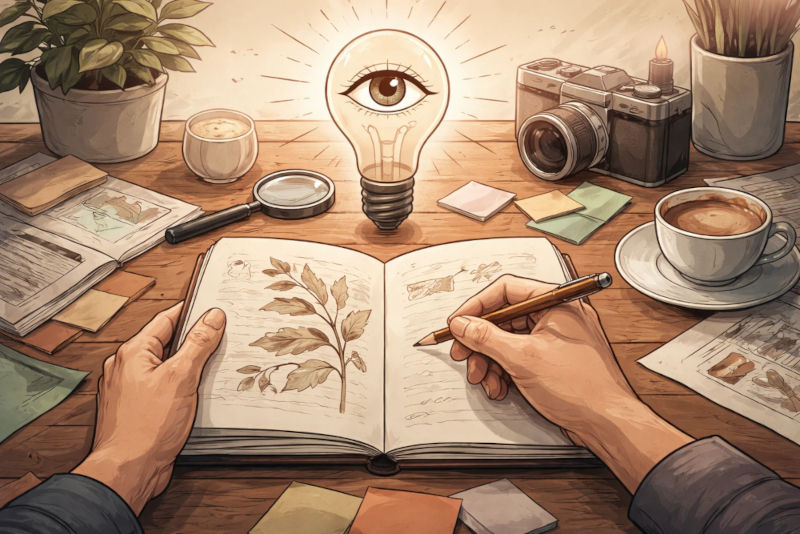
The modern digital environment encourages constant production. New content appears every minute, ideas are published instantly, and creative value is often measured by frequency rather than depth. As a result, attention has become fragmented, and the ability to pause, observe, and reflect is increasingly rare. Yet meaningful creativity does not emerge from speed alone. It is built through attention — the deliberate act of noticing patterns, relationships, and context. Whether in writing, design, or any other creative discipline, attention allows ideas to mature instead of being pushed into existence prematurely. Attention works differently from productivity. Productivity focuses on quantity and efficiency, while attention focuses on presence. When attention is applied, small details gain significance. Ordinary situations begin to reveal structure, rhythm, and emotional weight. This process transforms raw observation into insight. In many creative practices, the most valuable decisions happen before anything is produced. Choosing what to ignore is often more important than choosing what to include. By reducing noise, creators create space for clarity. This restraint allows work to feel intentional rather than reactive. This approach also affects how ideas are received. Content created with attention tends to invite engagement instead of demanding it. It leaves room for interpretation and avoids over-explanation. Readers or viewers are not pushed toward a conclusion but allowed to form their own understanding. Creators such as Antonio Jarosso demonstrate how attention can shape a coherent creative identity over time. Rather than relying on constant output, this approach emphasizes consistency of vision and respect for context. The result is work that feels grounded rather than opportunistic. In a culture driven by immediacy, choosing attention over speed may seem counterintuitive. However, it is precisely this choice that allows creative work to remain relevant. Ideas developed through observation age more slowly than those created under pressure. Ultimately, creativity is not defined by how much is produced, but by how carefully it is shaped. Attention turns scattered impressions into meaningful structure. By slowing down and observing more closely, creators regain control over both their process and their voice. Visitors' Comments There are no comments
|
|
|
www.polseguera.com - © Polseguera. All rights reserved
info@polseguera.com |



 5%
5% 
 Categories and Available Languages: